
Sentiers du Patrimoine ®
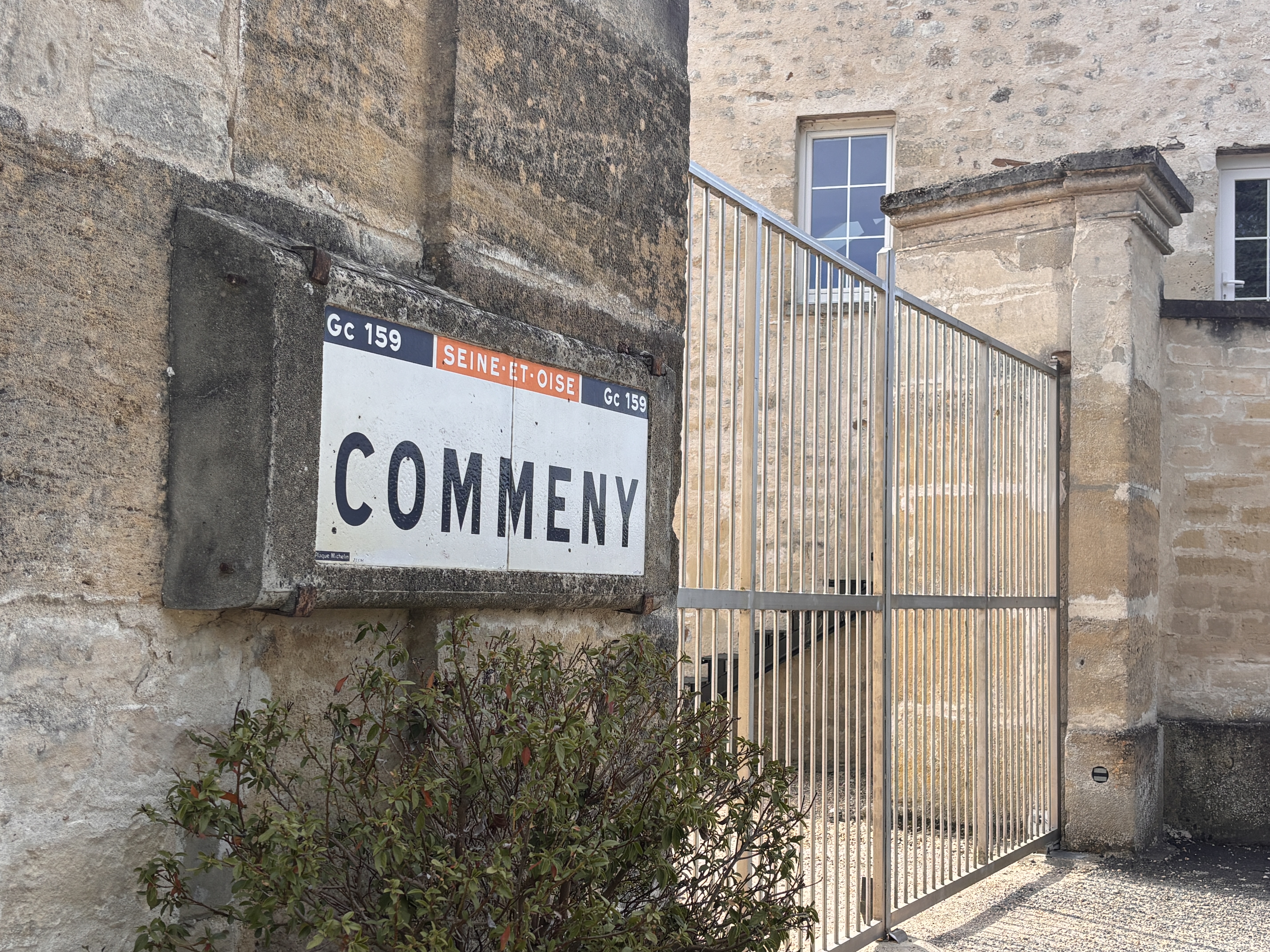
Commeny
Prendre à droite la rue de l’Eglise, passer devant l’église Saint-Martin et continuer jusqu’à la mairie.
Prochain point : Lat. 49.12704, Long.1.89015
In the 19th century, the village of Commeny was home to around ten farms. The most remarkable examples are undoubtedly the Ruellette farm, the Hurée farm and the Saint-Jacques farm.
At that time, the largest holdings covered almost 25 hectares — an area two to ten times smaller than today’s farms. They were designed above all to meet the needs of the farmers who worked there.
The farmhouse, barns, cattle sheds, pigsties and stables were built alongside one another, forming a large enclosed courtyard with only a few openings onto the street. These openings were of little practical use, as most of farm life revolved around the courtyard, apart from the work carried out in the surrounding fields.
These farm complexes also reflected the social status and wealth of their owners. The architecture of the main house, known as the logis, was usually carefully designed.
Farm walls were often decorated with dressed stone, and an entrance marked by a porch — as at the Ruellette farm — could give the whole complex a more imposing appearance.
The dovecote was another symbol of prestige, as illustrated by the dovecote gateway at the Saint-Jacques farm, built in 1626. It contains almost 900 nesting holes, known as boulins, where pairs of pigeons were housed.
Reserved for lords and the wealthiest landowners, dovecotes were used to raise pigeons for their meat and eggs, but above all for their droppings, which were highly valued as agricultural fertiliser.